

IMPACT
Five Years In, the Results Are Undeniable
When public health, midwifery, and community move as one, Black mamas are respected, celebrated, and supported to thrive, and so are their babies.

IMPACT HIGHLIGHTS
By the Numbers
Beloved Birth is transforming both care experiences and health outcomes.
99.4%
say providers and staff treat them with respect
+95
Net Promoter Score, showing patient satisfaction far exceeding the industry average
100%
elimination of the racism-based disparity in preterm birth
8% vs 14%
preterm birth rate, 43% lower than standard care
5% vs 12%
NICU admission rate, less than half the rate of standard care


Benefits for Moms & Birthing People
-
Families in our Centering programs attend 11 prenatal visits instead of 7, and 3 postpartum visits instead of 1. Every Beloved Birth family also receives our Gold-Package of Black Love at no cost: doula support, fresh produce, essential supplies, exercise classes, massage, postpartum meals, and more.
-
With a Black care team providing loving, community-centered care, 82% of families feel seen, heard, and understood, and 76% feel honored and celebrated as a Black mama or birthing person.
-
81% of families experienced less stress in pregnancy, and they tell us they love their group visits and the built-in sisterhood.
-
Our families arrive carrying more: 34% screen positive for depressive symptoms when they come to us, compared to 20% in standard care. By 12 weeks postpartum, that had fallen to 25%. In standard care, it barely moved.

Benefits for Babies
-
Being born too soon or too small is a leading risk factor for infant mortality. Because of racism's impact on our health, Black babies in the U.S. are born preterm at higher rates: 14.7%, compared to 9.5% for white babies.
For Beloved babies, the preterm birth rate is just 8%, compared to 14% for Black babies born at our hospital without us. Among the families we serve, this racism-based disparity is gone. Not narrowed. Gone.
Beloved babies are also more likely to be born at a healthy weight: 9% had low birth weight, compared to 15% in standard care.
-
Just 5% of Beloved babies needed NICU care, compared to 12% of Black babies born at our hospital without us.
-
In Beloved Babies, group pediatric care, 87.5% of children are up to date on well-child visits and 82% on immunizations, compared to 72% and 24% of Black children in our health system. These are early indicators, and they point the same direction as everything else.
Scale & Reach
Since launching in October 2020, Beloved Birth Black Centering has grown from six groups a year to twelve, one for every due-date month.
500+Families served and counting, in a model built to scale nationwide.
50+Cohort groups have moved through Beloved Birth Black Centering together.
555,000+Black births across the U.S. each year; this model could transform care and health outcomes for all of these families.
LOCAL FAMILIES
Expecting in Oakland or Alameda County, California?
Are you pregnant and interested in getting prenatal care in Beloved Birth Black Centering? Reach out in your first or early second trimester to secure your spot in an upcoming group. You don't have to be an Alameda Health System patient already, and Beloved Birth is covered by Medi-Cal.
Call Alameda Health System’s Centering Enrollment Coordinator at (510) 847-1893 or email centering@alamedahealthsystem.org
BELOVED IS GOOD AT:
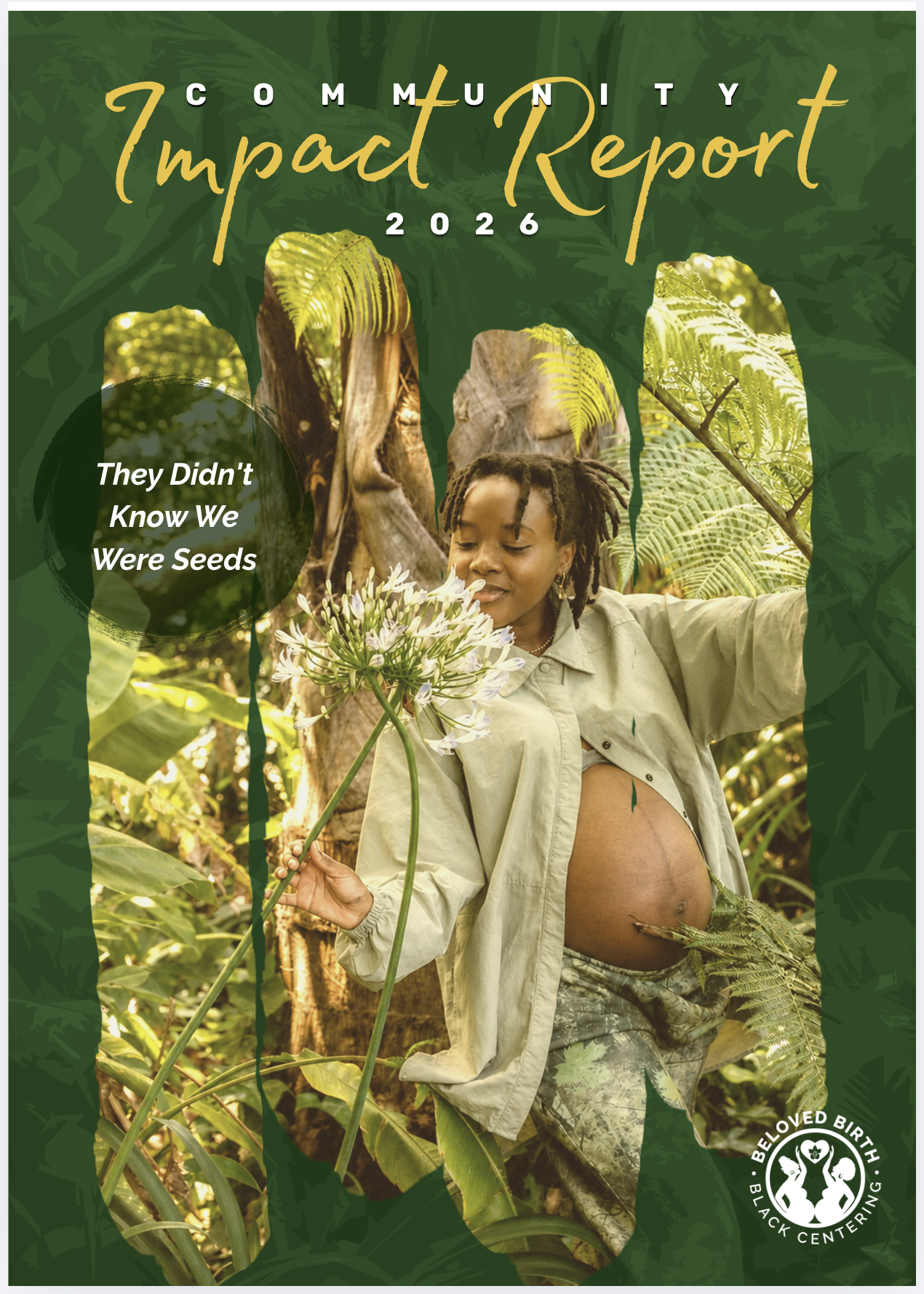
IMPACT REPORT
Check out our latest Community Impact Report to learn more

INVEST
Invest in a Beloved Approach to Birth Care
Every dollar invested in Beloved Birth Collective helps grow the movement to scale this transformative birth equity solution.